
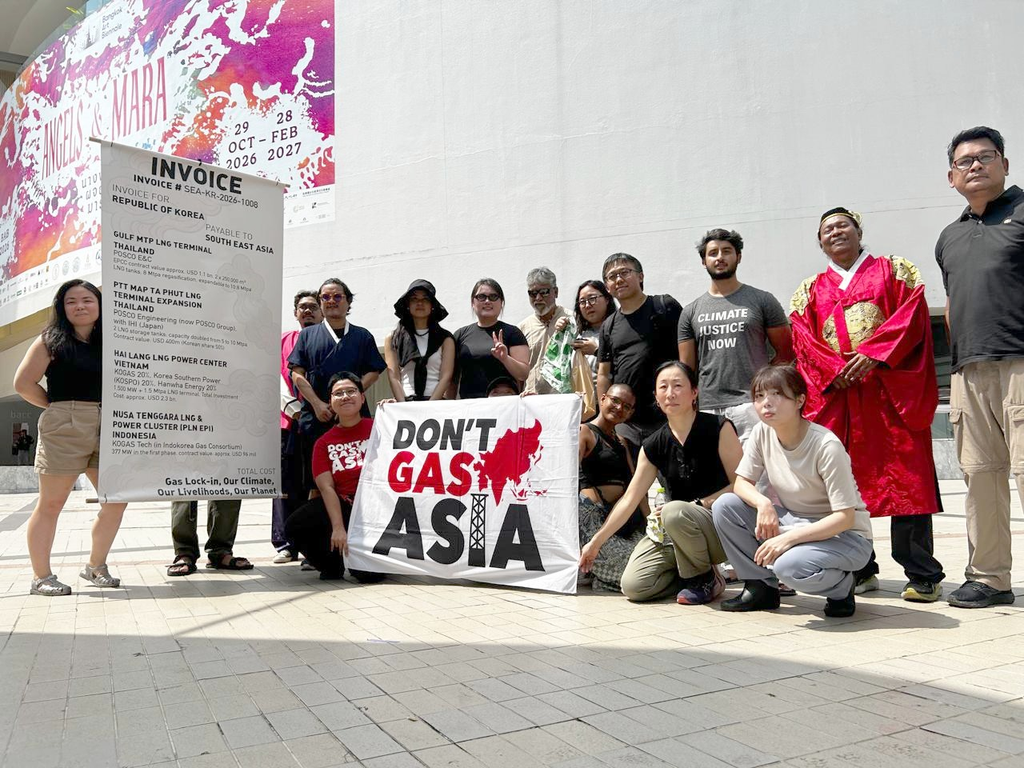
South Korean companies and public banks are financing billions in overseas LNG projects, locking Asia into long-term fossil fuel dependence.
BANGKOK (8 October 2026) – Civil society groups from across Southeast Asia and South Asia staged a performance today accusing the South Korean government of building gas dependence into the region’s energy future while claiming carbon neutrality at home. The performance was held first at the Bangkok Art and Culture Centre, then in front of the Embassy of the Republic of Korea in Bangkok.
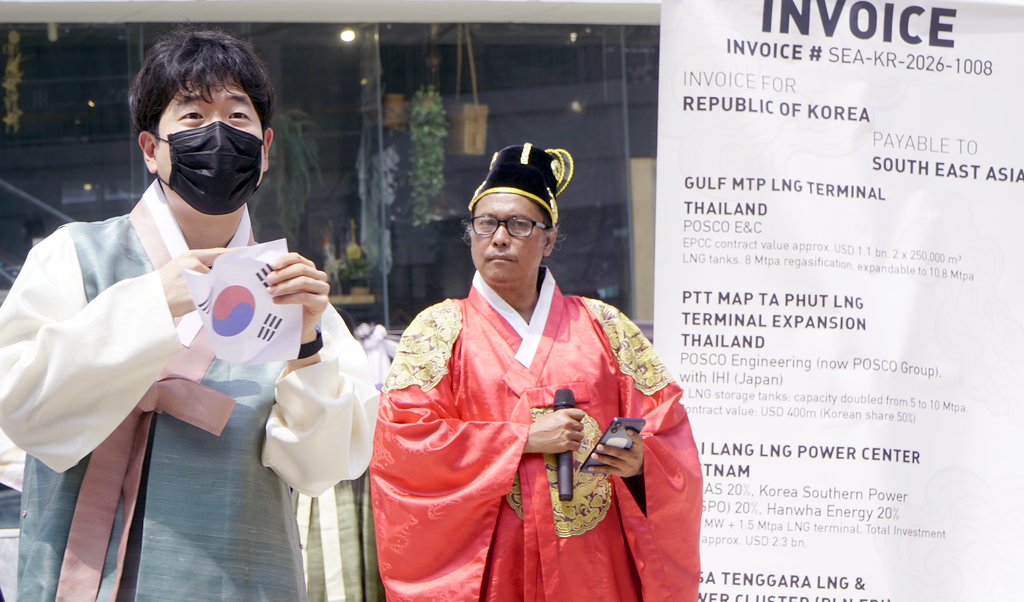

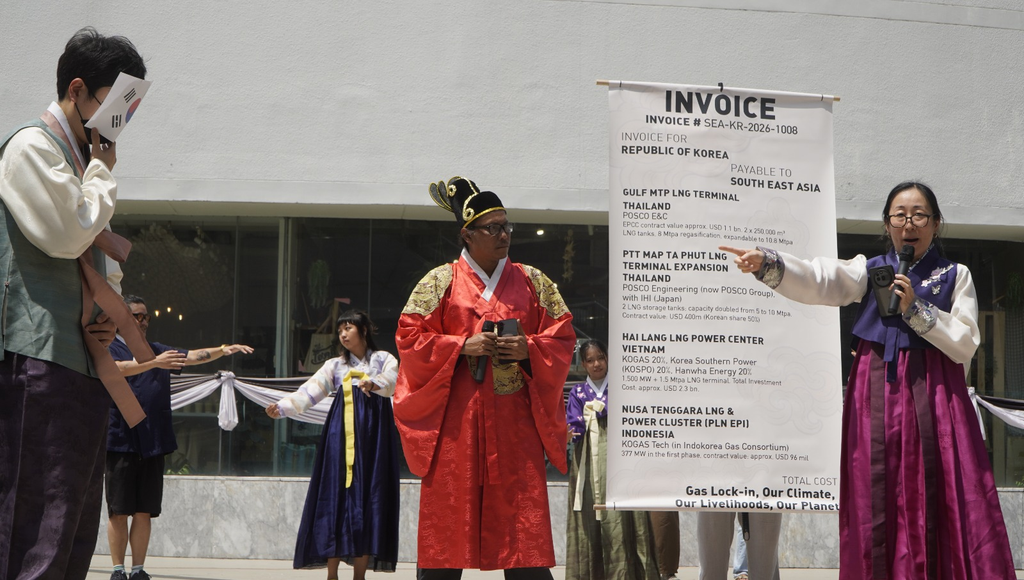


Organized by the Artivist Network alongside regional partners, the performance used the format of Korean historical drama to expose the companies, state-owned enterprises, and public finance institutions behind Southeast Asia’s gas and LNG expansion. Performers delivered a giant scroll itemizing South Korea’s role in the region’s gas buildout, followed by a symbolic sentencing scene in which a figure representing Korea was made to answer for the consequences.
South Korea builds the terminals, owns the plants, and finances the debt.
Since the closure of the Strait of Hormuz in February 2026, LNG supply has become scarce and prices across Asia have spiked. Despite this, gas expansion in Southeast Asia has not slowed down, locking the region into decades of fossil fuel dependence just as the risks of that dependence are becoming clear. The Global Energy Monitor found in September that the region has around 106 GW of gas power capacity and 70 million tonnes per year of LNG import capacity under development—a portfolio worth approximately USD 160 billion. LNG import capacity in development has grown by nearly half since 2024.
The Korean capital sits at the center of this expansion. Between 2017 and 2024, Korean public finance institutions provided an average of USD 5.7 billion a year for overseas gas infrastructure. This makes South Korea one of the largest providers of fossil fuel finance among the G20 countries, even after pledging carbon neutrality.
In Thailand, POSCO E&C is building the Gulf MTP LNG Terminal under a KRW 1.5 trillion (approx. USD 1.1 billion) contract signed in June 2025. The terminal sits on reclaimed land in Rayong province. Small-scale fishers in the area report catches falling from 100 kg a day to 2 kg.
In Vietnam, Korea Gas Corporation, Korea Southern Power, and Hanwha Energy hold 60% of the Hai Lang LNG Power Project, a USD 2.3 billion plant. Two-third of that stake sits with Korean state-owned companies. Four years after the project’s groundbreaking, there is still no clear evidence that construction has begun. Analysis of the project’s feasibility study shows that Vietnam Electricity could pay up to USD 1 billion a year for power from the plant, at a tariff around 70% higher than the average for Vietnam’s major coal plants.
Elsewhere in Vietnam, the Export-Import Bank of Korea has signed a financing agreement for the Long An LNG power project, developed by GS Energy. Additionally, SK Innovation broke ground on the Quynh Lap LNG power project in May 2026.
Speakers describe a pattern of exposure, loss, and unaccountable finance.
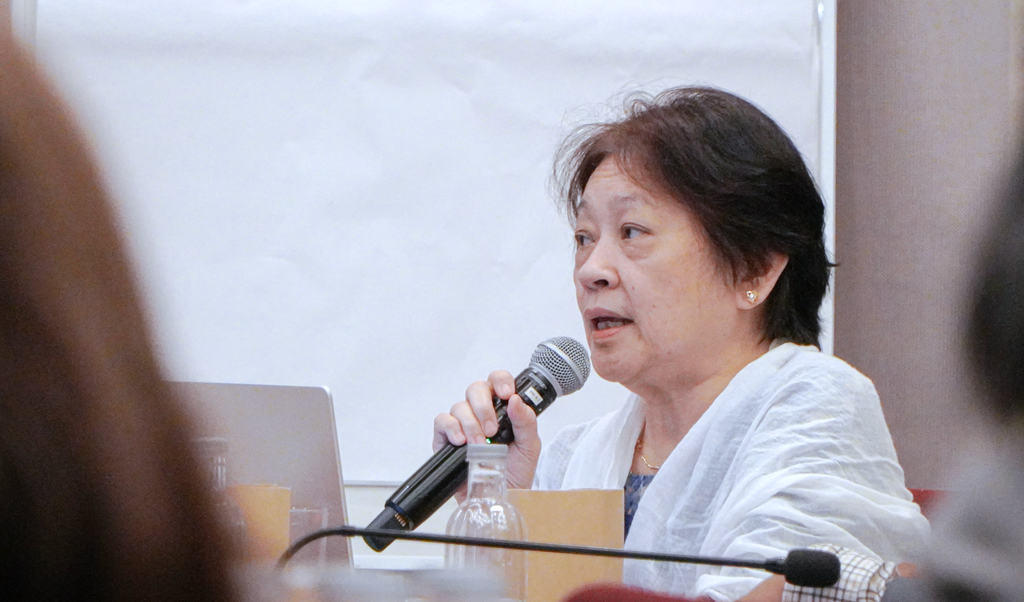
Lidy Nacpil of the Asian Peoples’ Movement on Debt and Development (APMDD) and Don’t Gas Asia Campaign described how South Korea is practicing a double standard on climate: “While pledging clean energy domestically, its public finance institutions and state enterprises are locking Southeast Asia into decades of expensive, volatile fossil fuels. Expanding LNG capacity in our region does not build energy security. It leaves us vulnerable to international supply shocks and spiraling prices. Korea must stop bankrolling gas development abroad and redirect its capital toward a clean, community-centered renewable energy transition.”
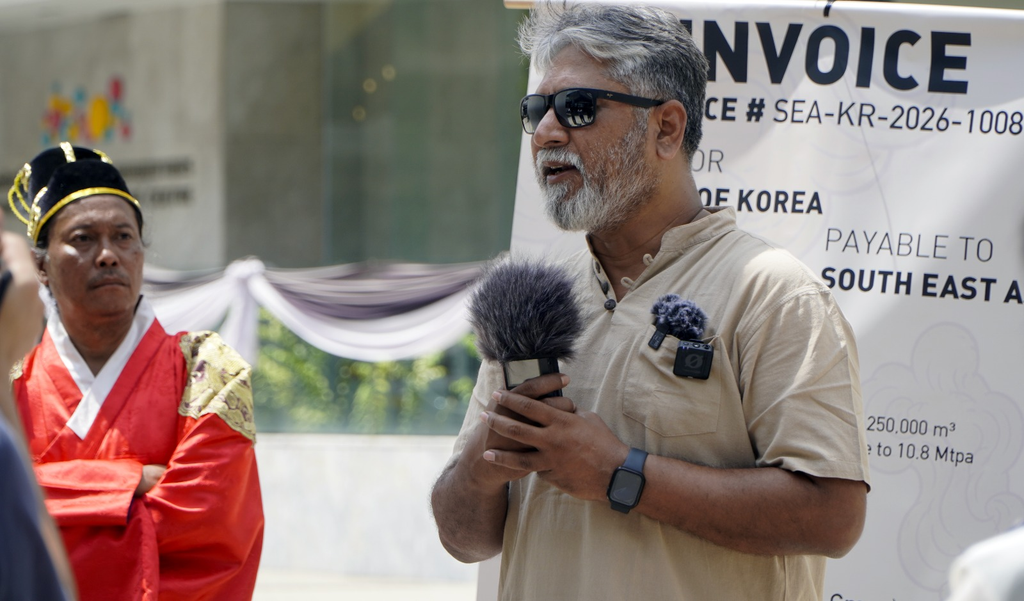
Sharif Jamil of Waterkeepers Bangladesh and Don’t Gas Asia said: “South Korea’s public finance is driving a high-risk gamble not only in Southeast Asia but also South Asia, particularly Bangladesh — saddling our countries with soaring energy costs while destroying local coastal livelihoods. Korean public banks and corporations must immediately stop expanding their overseas fossil fuel projects and answer for the long-term economic and environmental fallout they are causing.”
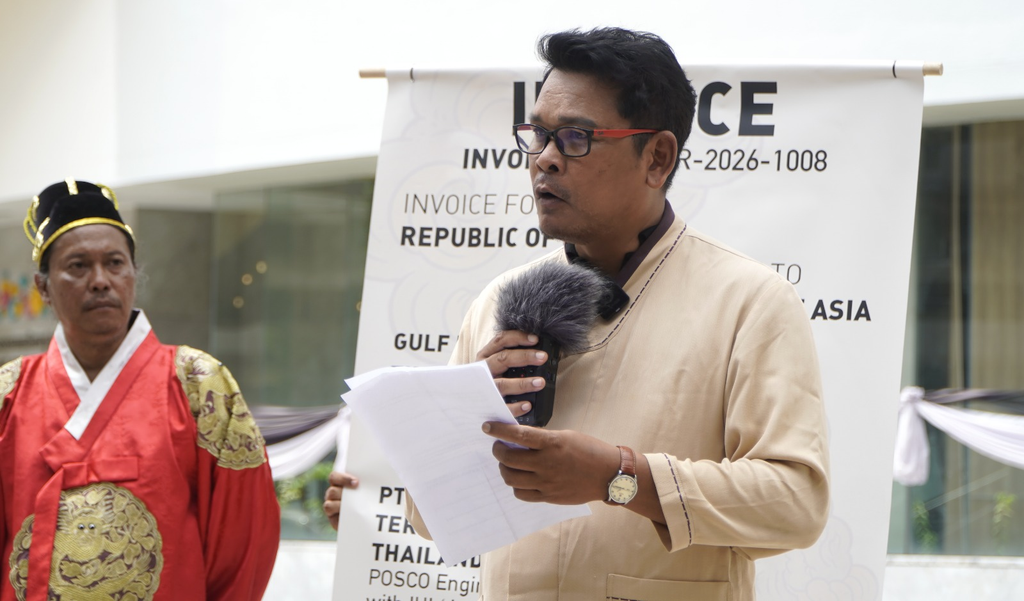
Phwat Kanchawong of EEC Watch Group spoke about the loss of local fisheries to LNG terminal development and land reclamation at Map Ta Phut, describing a community that was not consulted before reclamation began and has seen no accountability since.
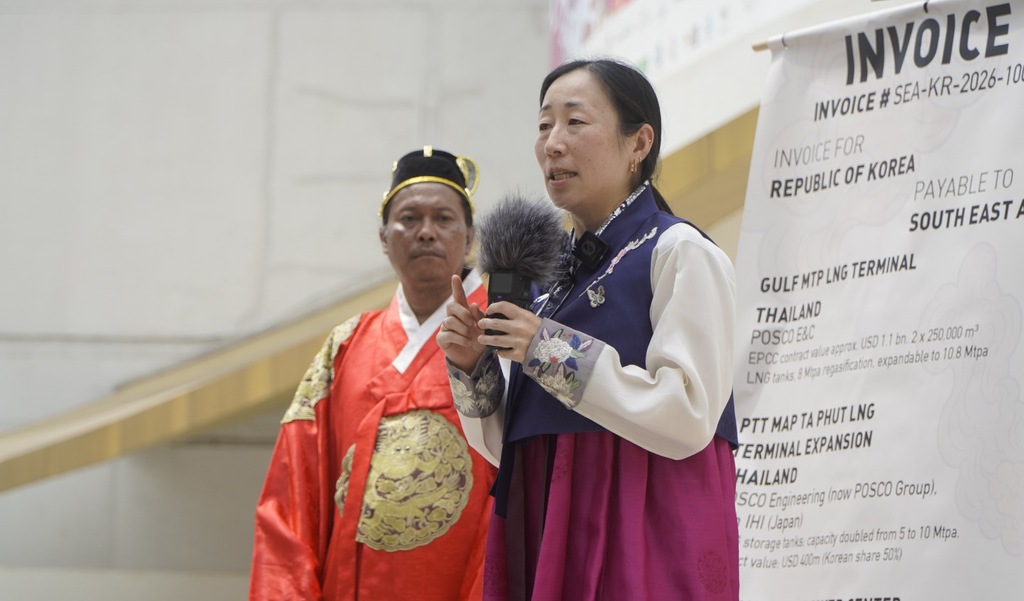
Makiko Arima of Oil Change International placed Korea’s overseas gas financing in regional context, noting that Korea remains one of the largest public financiers of gas in Asia alongside Japan, and arguing that expanded LNG import capacity increases—rather than reduces—exposure to the kind of price shocks and supply disruption seen since the closure of the Strait of Hormuz.
Demands
The organizers are calling on the South Korean government to:
- top supporting and enabling gas infrastructure development in Southeast Asia
- Direct the Export-Import Bank of Korea and the Korea Trade Insurance Corporation to end financing for all anticipated gas infrastructure projects in the region
- Direct Korea Gas Corporation, Korea Southern Power, and other state-owned enterprises withdrew from anticipated gas infrastructure projects in the region.
- Redirect Korean public capital toward a just and renewable energy transition in Southeast Asia.
Organizers delivered a formal demand letter to the Embassy of the Republic of Korea in Bangkok at the close of the performance.
For media inquiries, interview requests, or additional background, please contact:
Lani Villanueva, Media and Communications Officer
Mobile Phone (Whatsapp): +639052472970
Email: villanueva.lani@gmail.com